
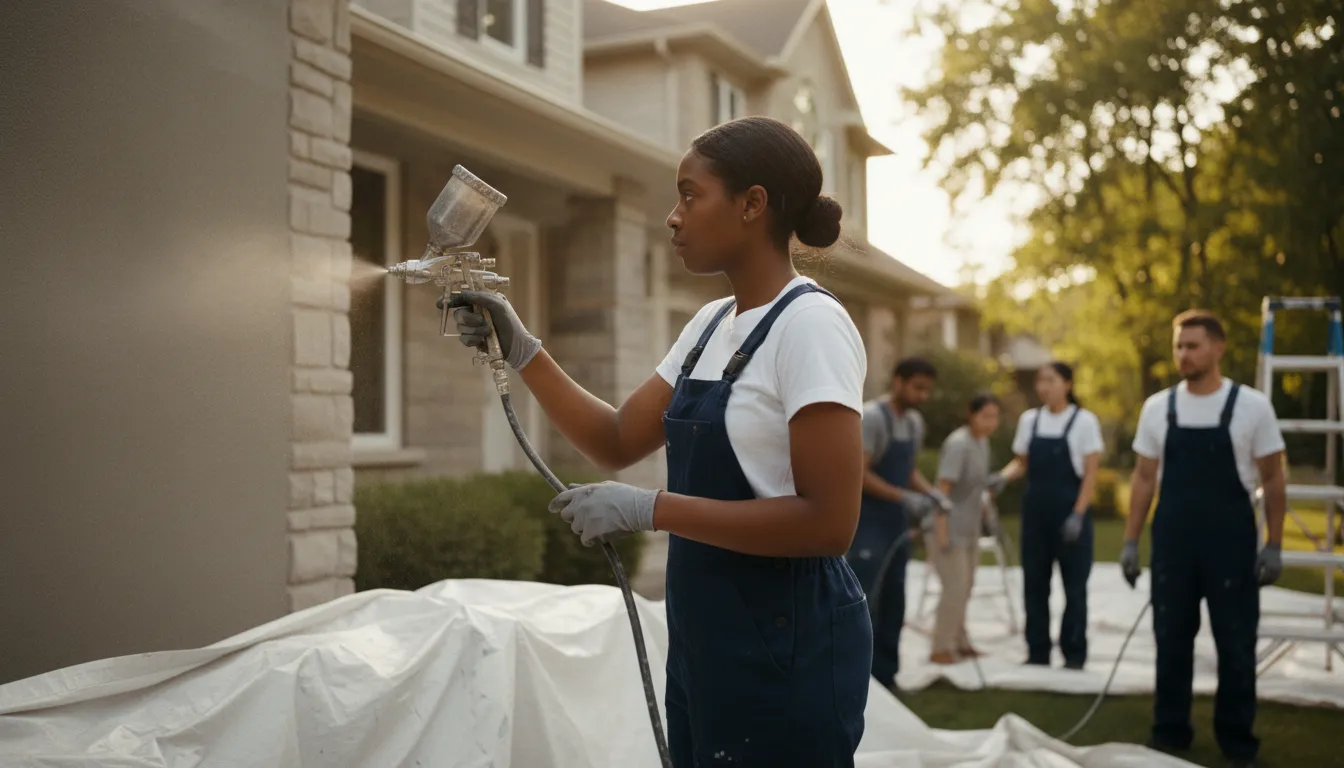
Exterior Painting Systems Built for Freeze-Thaw, Not Just Curb Appeal
An exterior coat is a building envelope decision as much as a colour decision. We caulk, prime, and coat for what a GTA winter will actually do to the surface. Email us for an assessment and quote.
Email Us for a Free EstimateWhy homeowners choose us
Free estimates · No obligation
The Building Envelope Perspective on Exterior Painting
An exterior coating system is one part of a home's building envelope, alongside flashing, caulking, and siding or masonry itself. In the GTA, that envelope goes through repeated freeze-thaw cycling every winter, plus UV exposure through long summer days. Any weak point in caulking or a coating gap will move and open up over a winter, letting water in behind the finish.
Caulking and joint sealing first
We inspect and reseal joints, trim gaps, and transitions between materials before painting, since a coating applied over an open joint will crack along that same line by the following spring.
Substrate-matched priming
Brick, previously painted siding, and stucco each need a different primer approach — masonry conditioners for brick, bonding primers for glossy previous coats, and appropriate sealers for stucco.
Vapour-permeable coatings where needed
On masonry, we favour coatings that allow some vapour transmission so moisture inside the wall assembly can escape rather than getting trapped behind an impermeable film.
Application temperature windows
Exterior coatings have minimum application temperatures and dew point requirements; we schedule exterior work within those windows rather than applying product outside spec.
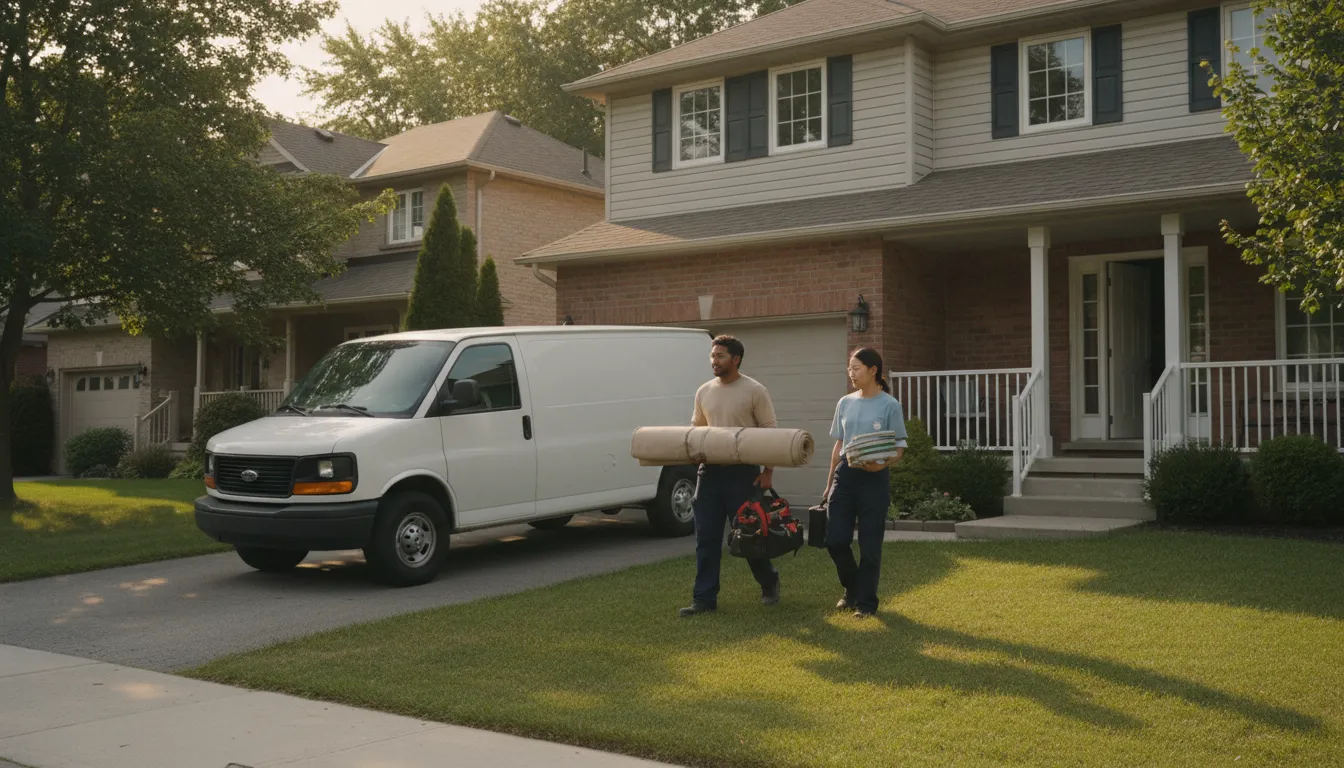
Why Exterior Paint Peels at Predictable Spots
Across GTA homes, exterior peeling shows up in consistent locations: at eaves and fascia where moisture collects, along caulked joints that have opened up, and on south and west-facing walls that see the most UV and thermal cycling. These are envelope failure points, not random paint defects, and they usually trace back to a joint that wasn't resealed or a coating that couldn't handle the vapour load.
Reseal, Prime for the Substrate, Then Coat With Vapour Permeability in Mind
We treat caulking and joint resealing as part of the painting scope, not an afterthought, and we choose primers and topcoats based on the specific substrate and its vapour behaviour. On brick and stucco in particular, this often means avoiding fully impermeable coatings that trap moisture and accelerate failure from the inside out.
Our Exterior Painting Process
The same envelope-first sequence applies to a single-storey bungalow or a multi-storey exterior.
- 1
Envelope assessment
We inspect caulking, joints, trim, and substrate condition across the full exterior before quoting.
- 2
Repair and resealing
Open joints, damaged trim, and failed caulking are addressed before any coating work begins.
- 3
Substrate-matched priming
Brick, siding, and stucco are each primed with a product suited to that material.
- 4
Coating application within temperature windows
Finish coats are applied within the manufacturer's temperature and dew point specifications.
- 5
Final exterior walkthrough
We walk the full exterior with you against the original scope before calling the project complete.
Why Choose Us for Exterior Painting
Exterior coatings are judged by how they hold through a GTA winter, not by how they look on a dry September afternoon.
Building Envelope Approach
We treat caulking and joint sealing as part of the exterior painting scope, not separate from it.
Substrate-Specific Priming
Brick, stucco, and siding are each primed with an appropriate, matched product.
Vapour-Permeability Awareness
We avoid trapping moisture behind impermeable coatings on masonry surfaces.
Temperature-Window Scheduling
Application is scheduled within the coating's minimum temperature and dew point requirements.
Written Scope of Work
Prep, caulking, and coat plan are documented before work begins.
Careful Property Protection
Landscaping, walkways, and windows are protected throughout exterior work.
Exterior Painting Questions
What time of year is best for exterior painting in the GTA?
Most exterior coatings need daytime temperatures and dew points within a specific range, which typically means late spring through early fall in this region, though some products allow a wider window.
Do you paint brick exteriors?
Yes, using masonry-appropriate primers and vapour-permeable coatings so moisture inside the wall can still escape.
How do you handle caulking and joint repair?
We inspect and reseal joints, trim gaps, and material transitions as part of the exterior scope before any coating is applied.
Can you match my existing exterior colour?
Yes, colour matching is part of the assessment stage, whether from an existing sample or a photo in consistent daylight.
How long does an exterior repaint usually take?
It depends on the size and condition of the home, and we provide a realistic schedule as part of the written scope, accounting for weather delays.
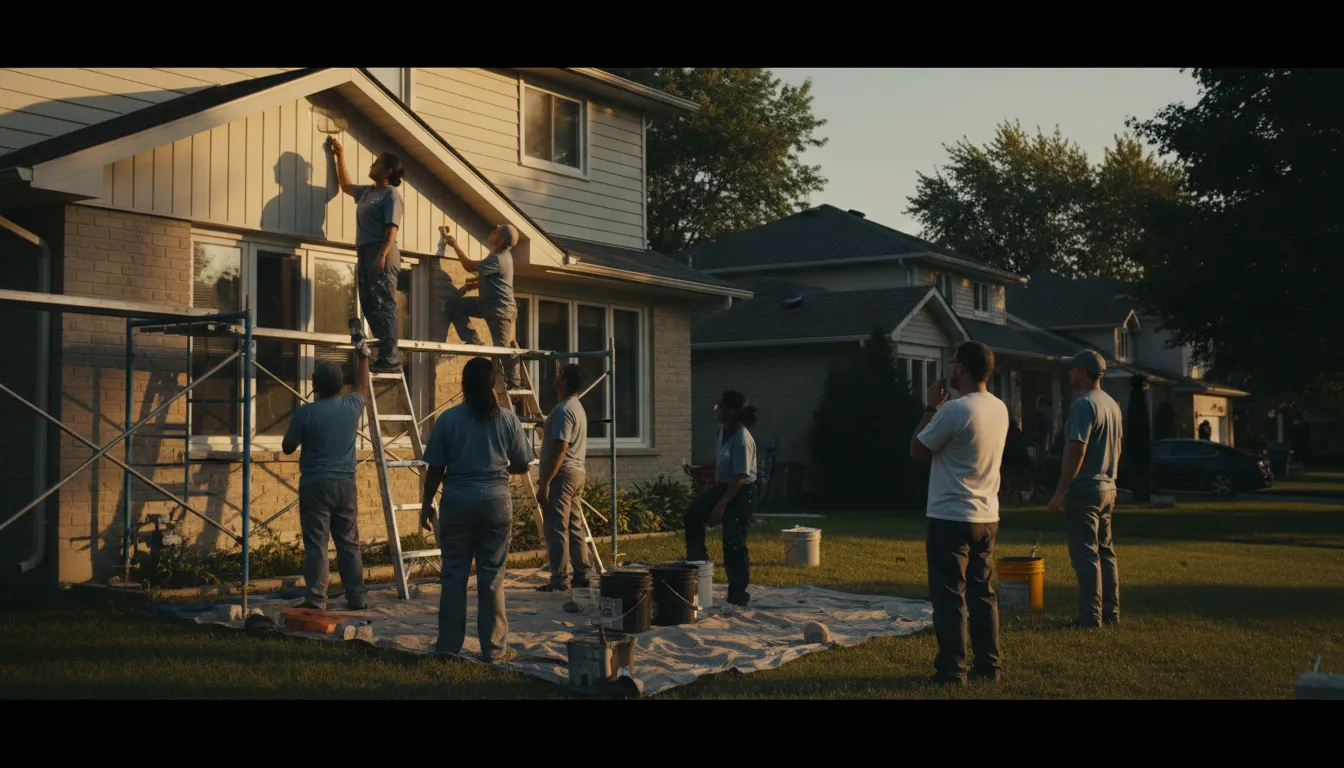
Protect Your Home's Exterior This Season
Email us with your home's details and we'll follow up with an envelope assessment and quote.
Email Us for a Free EstimateWeather sets your painting window — email us to plan the job.
Fall painting conditions in Toronto, ON
Fall around Toronto, ON offers stable, moderate temperatures that are perfect for exterior painting — getting it done now protects your siding and trim through winter.
Proudly Serving Toronto, ON
Local, on-time service throughout Toronto and the surrounding area.