

Deck & Fence Staining Matched to Wood Species and Sun Exposure
A stain that looks right on application day but fails by the following summer usually failed at the moisture-check stage. We test before we coat. Email us for an assessment and quote.
Email Us for a Free EstimateWhy homeowners choose us
Free estimates · No obligation
Why Deck Stain Fails Faster in the GTA Than Elsewhere
GTA decks and fences take a harder seasonal beating than the stain can label often accounts for: intense UV through GTA summers, driving rain off Lake Ontario in the fall, and repeated freeze-thaw cycling through winter that opens up wood grain at the surface. Add de-icing salt spray near driveways and walkways, and lower-grade or improperly applied stains fail within one to two seasons.
Moisture testing before staining
We check wood moisture content with a meter before staining — coating over wood that's still too wet traps moisture and leads to early peeling and mildew.
Species-appropriate stain selection
Cedar, pressure-treated pine, and composite decking each accept stain differently. We match the product to the material rather than using one stain everywhere.
Proper surface preparation
Sanding, cleaning, and brightening the wood surface as needed so the stain penetrates evenly instead of sitting unevenly on a weathered grey surface.
UV and water-repellent formulation
We favour penetrating stains with UV inhibitors and water repellents suited to GTA sun exposure and seasonal rainfall patterns.

Grey, Cracked, or Peeling Decks Are a Prep Failure, Not a Product Failure
Most deck and fence failures we see in the GTA trace back to staining over wood that was too wet, too weathered, or not properly cleaned first. A film-forming product applied over a damp board will trap moisture underneath, and freeze-thaw cycling through winter accelerates the cracking and peeling that follows.
Test, Prep, Then Stain — In That Order
We check moisture content, clean and brighten the wood as needed, and let the surface dry to an appropriate range before applying a penetrating stain matched to the wood species. This sequence is slower than a same-day stain job, but it's the difference between a finish that holds for several seasons and one that needs redoing the following year.
Our Deck & Fence Staining Process
The same sequence applies to a small fence run or a full deck.
- 1
Assessment and moisture check
We inspect the wood, check moisture content, and identify species and prior coating condition.
- 2
Cleaning and prep
Surfaces are cleaned, brightened, and sanded as needed, then allowed to dry to an appropriate moisture range.
- 3
Stain application
A penetrating stain matched to the wood species and sun exposure is applied per manufacturer coverage rates.
- 4
Cure time and walkthrough
We allow proper cure time before foot traffic and walk the finished deck or fence with you.
Why Choose Us for Deck & Fence Staining
Outdoor wood finishes are judged by how they hold up through a GTA winter, not by day-one appearance.
Moisture Testing as Standard Practice
We check moisture content before staining rather than assuming the wood is dry enough.
Species-Matched Stain Selection
Cedar, pressure-treated, and composite surfaces each get an appropriate product.
Freeze-Thaw Awareness
We account for GTA winter cycling when recommending stain type and reapplication schedule.
Written Scope of Work
Prep steps and product choice are documented before work begins.
Careful Surrounding Protection
Plantings, siding, and hardscaping near the work area are protected during staining.
Realistic Scheduling
We plan around drying windows and weather rather than rushing application.
Deck & Fence Staining Questions
How often should a deck be restained in the GTA?
It depends on sun exposure and stain type, but many GTA decks benefit from restaining every two to three years given our UV and freeze-thaw conditions.
Can you stain a deck that's already grey and weathered?
Yes, we clean and brighten weathered wood before staining so the new coat penetrates evenly rather than sitting on top of degraded fibres.
What's the difference between a solid and semi-transparent stain?
Solid stains sit more like paint and hide wood grain while offering more UV protection; semi-transparent stains penetrate more and show the wood grain but may need more frequent reapplication.
Do you stain fences as well as decks?
Yes, fence staining follows the same moisture-check and prep process as decks.
How long does the wood need to dry before staining?
It depends on recent weather, but we use a moisture meter rather than a fixed number of days to confirm the wood is ready.
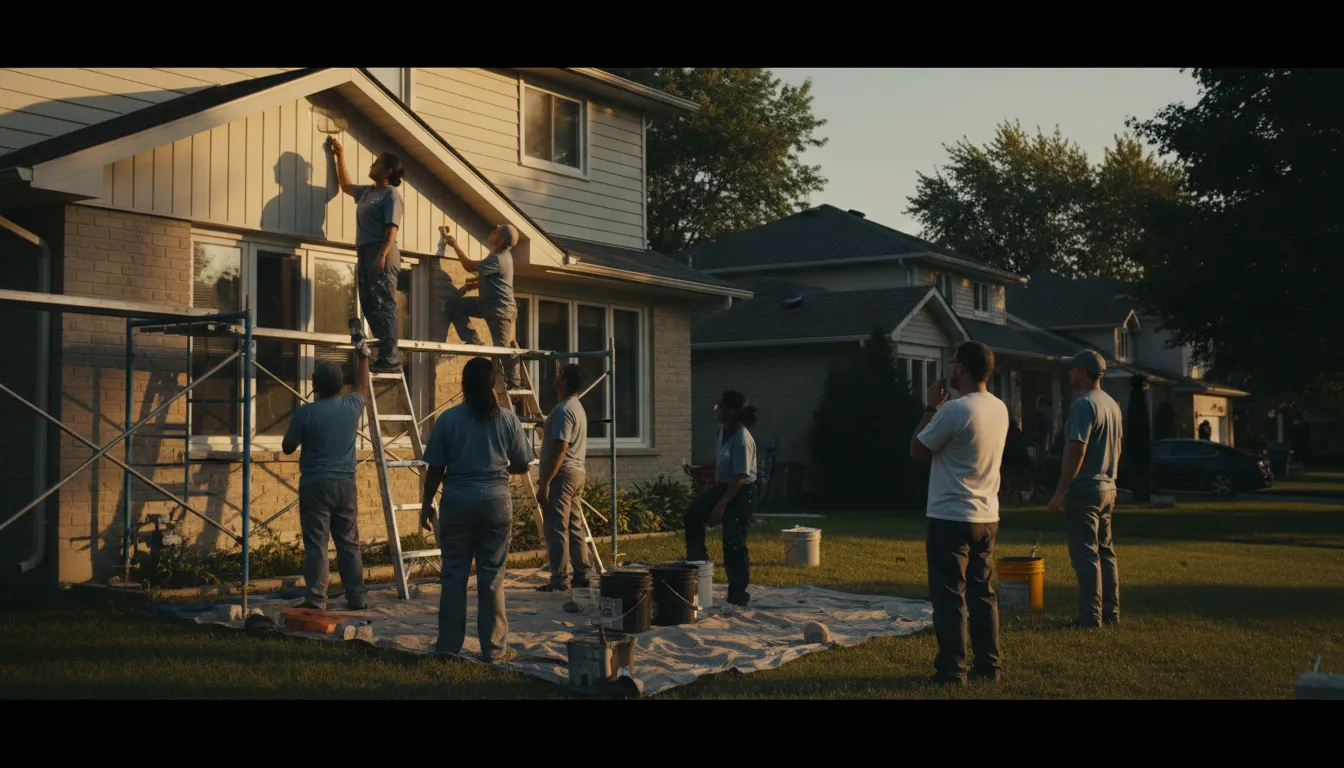
Protect Your Deck or Fence the Right Way
Email us with your deck or fence details and we'll follow up with a moisture assessment and quote.
Email Us for a Free EstimateWeather sets your painting window — email us to plan the job.
Fall painting conditions in Toronto, ON
Fall around Toronto, ON offers stable, moderate temperatures that are perfect for exterior painting — getting it done now protects your siding and trim through winter.
Proudly Serving Toronto, ON
Local, on-time service throughout Toronto and the surrounding area.